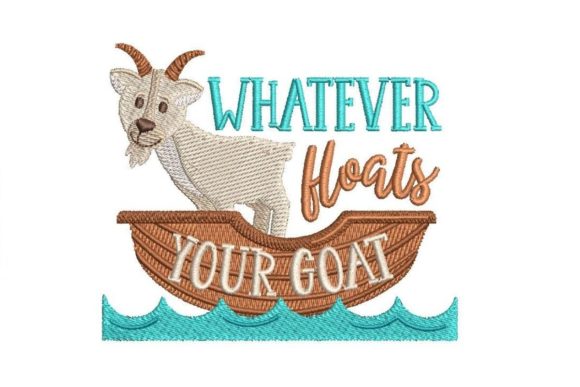
Whatever Floats Your Goat Embroidery Review
Walking up to a craft fair booth, I don’t just look at the price tag; I look for the story. As an experienced embroidery designer who has spent years turning digital files into tangible craft fair products, I know that the difference between a item that sits on the table and one that flies off it often comes down to a single design choice. This week, I pulled Whatever Floats Your Goat from my library to see if it has what it takes to be the star of a weekend market display. If you are an Etsy seller, a boutique maker, or someone looking to add personality to their handmade product line, this review is for you.
First Impressions: Humor Meets Handmade Charm
The title alone does heavy lifting. In the world of machine embroidery design, humor is a powerful hook because it invites interaction. When a customer sees a witty phrase like Whatever Floats Your Goat, they pause. They smile. They pick up the item to read it again. This isn’t just about aesthetics; it’s about emotional connection. The design feels modern, slightly rustic, and undeniably fun. It strikes that perfect balance between Inspirational quirkiness and everyday relatability.
From a visual standpoint, the quote suggests a font style that is likely bold and legible. For a small shop product, legibility is king. You want your customer to understand the joke within three seconds of glancing at your booth. A design that requires squinting loses sales. Whatever Floats Your Goat promises a clear message, making it an excellent candidate for high-traffic areas where attention spans are short.
Product Versatility: Where Does It Shine?
One of the biggest questions I get as a designer is, "What should I embroider this on?" With a versatile embroidery file like this, the answer is almost anywhere. Here is how I would deploy this design across different categories to maximize appeal:
- Tote Bags: This is perhaps the strongest use case. A canvas tote with Whatever Floats Your Goat centered or placed on the side seam becomes a walking billboard for your brand. It is practical, reusable, and fits the "farmhouse chic" or "boho" aesthetic that dominates handmade markets. A tote bag design that makes people laugh is an impulse buy waiting to happen.
- Kitchen Textiles: Tea towels and aprons are classic craft fair products. The phrase works beautifully on a flour sack towel hanging in a kitchen display. It adds a touch of whimsy to a functional item. For an apron embroidery project, placing the text on the bib area draws the eye and highlights the craftsmanship of the stitching.
- Patches and Pins: If the design allows for clean edges, converting this quote into an embroidered patch opens up a new revenue stream. Patches can be sewn onto denim jackets, backpacks, or hats by the end-user. This extends the life of your digital embroidery file beyond the initial sale.
- Caps and Headwear: Curved surfaces can be tricky, but a well-spaced embroidery design like this can pop on a structured baseball cap. Just ensure the stitch density is appropriate so the fabric doesn’t pucker under the curve.
Production Realities: What to Watch Out For
As a professional, I never jump straight into production without testing. Even a simple quote needs careful execution to look premium. Here are the critical technical points to consider when working with Whatever Floats Your Goat:
Stitch Density and Detail
Check the stitch density closely. If the letters are too thin, the fabric may show through, especially on textured materials like waffle-weave tea towels. Conversely, if the fill stitches are too dense, the hoop marks will be difficult to remove, and the final product may feel stiff. Look for any tiny details or sharp corners in the lettering that might require additional stabilizer or slower machine speeds.
Fabric Texture and Contrast
The success of this design relies heavily on thread colors against your chosen background. On a dark fabric, you need bright, saturated threads to make the white space of the letters visible. On light fabrics, darker threads provide better contrast. Always test on scrap fabric that matches the weight and texture of your final product. Fabric texture can eat up fine details, so keep the design simple enough to remain crisp.
Hoop Size and Placement
Confirm the required hoop size before starting. If the design is large, it might limit your placement options on smaller items like pouches. For larger items like pillow covers or full-size aprons, ensure you have a large enough hoop or plan for multi-hooping techniques to maintain alignment. Proper spacing is key to ensuring the design doesn’t look cramped or floating aimlessly.
Selling Strategy: From Booth to Online
How does this design translate to sales? First, consider the photography. A humorous design like Whatever Floats Your Goat lends itself well to lifestyle shots. Imagine a photo of a woman holding a tote bag with this design, laughing with friends. That image sells the feeling, not just the object. Create a printable mockup to use in your online listings, showing the design on various backgrounds to help customers visualize it in their homes.
For your physical booth, group similar items together. Hang the tea towels next to the aprons to create a cohesive "kitchen collection." Use the Whatever Floats Your Goat items as focal points to draw people in. Once they stop for the joke, they might notice the quality of the stitching, the durability of the tote, or the softness of the towel. This is how you convert browsers into buyers.
Designer’s Checklist Before Production
Before you commit to a batch run, follow these essential steps to ensure your commercial embroidery efforts are successful:
- Test Run: Always stitch the design on the exact fabric you plan to sell. Check for puckering, thread breaks, or color mismatches.
- Stabilizer Choice: Use the right stabilizer for the fabric weight. Heavy-duty cut-away stabilizers are often best for woven bags and towels to prevent distortion.
- Commercial License: Verify that your embroidery file includes commercial licensing rights. Selling finished goods without proper permission can lead to legal issues.
- Quality Control: Inspect every finished product for loose threads or misaligned stitching. A sloppy finish undermines the perceived value of your handmade product.
In conclusion, Whatever Floats Your Goat is more than just a funny phrase; it is a strategic asset for any embroidery business. It offers versatility, humor, and visual appeal that resonates with modern consumers. By paying attention to production details and presenting it effectively in your booth or online store, you can turn this simple design into a top-selling item. So, load your hoops, check your thread colors, and get ready to bring some laughter—and sales—to your next market day.