Mylar Baby Lovies: A Designer’s Review for Craft Fair Success
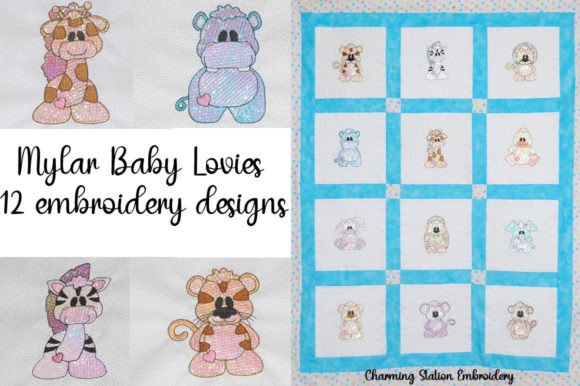
As an embroidery designer who spends half my life at craft fairs and the other half digitizing files, I know that the difference between a design that sits in your hoop forever and one that sells out by noon often comes down to visual impact and practical application. Recently, I had the chance to review Mylar Baby Lovies, a set of 12 delightful designs optimized for use with Mylar. The description promises charming little animals that babies love, suggesting they would make a terrific baby quilt. But does it translate to the high-stakes environment of a weekend market booth? Let’s break it down from a production and sales perspective.
First Impressions and Visual Appeal
The title "Mylar Baby Lovies" immediately suggests a specific aesthetic: shiny, tactile, and premium. In the world of handmade goods, texture is everything. When customers are browsing a table covered in fabric items, something that catches the light differently than standard cotton or linen will draw their eye. These designs feel soft yet decorative, leaning into the "cute" factor without being overly cluttered. They strike a balance between modern minimalism and rustic charm, which is a sweet spot for nursery-themed products.
For a craft fair seller, this is crucial. You have about three seconds to capture attention. A design that implies a unique material interaction—like the reflective quality of Mylar—creates curiosity. It feels like a boutique maker item rather than a mass-produced toy. This perceived value allows you to price your finished product higher, appealing to parents looking for something special for a baby shower or a new arrival.
Product Versatility: Where Do These Designs Shine?
One of the strongest selling points of this collection is its versatility. With 12 distinct animal designs, you aren't limited to just one type of crafter product. Here is how I see these performing on various items:
- Tote Bags and Market Bags: A small, centered placement of one of the baby animals on a canvas tote creates a perfect tote bag design. It’s subtle enough for daily use but cute enough to spark conversation. Pairing a pastel-colored Mylar patch on a neutral bag elevates the look significantly.
- Apron Embroidery: For the parent who is also crafting, embroidering a tiny animal on the bib of a kitchen apron adds a personal touch. This works beautifully as a gift item. The contrast of the shiny element against the matte fabric of a flour sack towel or apron is visually striking.
- Tea Towel Embroidery: Similar to aprons, tea towel embroidery benefits from small, focal accents. Since these are animals, placing them in the corner or along the hem keeps the design playful without overwhelming the utility of the item.
- Embroidered Patches: This is perhaps the most profitable angle. If the designs are digitized with a clean edge, they can be used as iron-on or sew-on patches. Customers love adding personality to denim jackets, backpacks, or beanies. An embroidered patch featuring a Mylar-finished animal stands out on dark denim due to the light reflection.
- Caps and Headwear: Curved surfaces can be tricky, but small animal motifs work well on the front panel of baseball caps or bucket hats. Just ensure the stitch density is appropriate so the design doesn’t pucker on the curved structure.
- Pillow Covers and Quilts: The description mentions these would make a terrific baby quilt. This is true. Because there are 12 designs, you can create a cohesive series. Using them as accent blocks on a quilt or as appliqués on a pillow cover leverages the "set" nature of the file, encouraging buyers to purchase multiple items to complete the collection.
Production Practicality and Quality Control
Before committing to a large batch for a major holiday market, every designer needs to run a few tests. While the concept is strong, execution is key. Here are some critical notes to keep in mind when working with this digital embroidery file.
Material Interaction: Since the design is optimized for Mylar, you need to consider how you are applying it. Are you embroidering directly onto a Mylar sheet, or is this a transfer technique? If you are using actual Mylar ribbon or film, be aware that it can be slippery under the needle. You may need a different stabilizer or a temporary spray adhesive to keep the material stable during stitching. Test your thread colors carefully; bright threads might clash with the metallic sheen, while pastels might get lost. High-contrast combinations usually win.
Stitch Density and Detail: Check the stitch density of the digitization. Tiny details in the animals' faces need to be clear. If the design has too many fine lines, it might look muddy when stitched on textured fabrics like terry cloth tea towels. Always inspect the design in your software before hooping. If the design includes small lettering or intricate facial features, test it at the intended size. Sometimes, what looks good on screen loses clarity when reduced for a small pouch or cap.
Fabric Texture: Avoid placing these designs on heavily textured fabrics unless you are confident in your stabilizer choice. The shine of the Mylar element needs a relatively smooth background to pop. Cotton muslin or smooth canvas are safe bets. Dark fabrics can work, but ensure the thread or Mylar has enough brightness to stand out against the dark background.
Selling Strategy for Etsy Sellers and Boutique Makers
For the Etsy seller or small shop product owner, presentation is half the battle. How do you photograph a shiny, reflective design? Direct flash can create harsh hotspots. Try diffused natural light to capture the sheen of the Mylar without blowing out the highlights. Create a printable mockup that shows the design on different products to help customers visualize the final result.
Bulk production is where this set shines. Having 12 variations allows you to create a "mystery pack" or a "full zoo collection" listing. This encourages higher order values. For example, offer a bundle of five embroidered tea towels, each with a different animal, or a set of matching diaper bag accessories. Consistency in your brand is maintained by using the same font and color palette across all listings, even if the animal changes.
When describing these items, focus on the sensory experience. Words like "shimmer," "tactile," "soft," and "premium" help convey the value. Emphasize that these are not just printed images, but real embroidered elements that add dimension to the product. This distinction justifies a higher price point and appeals to buyers looking for quality handmade gifts.
Final Verdict
Mylar Baby Lovies is a strong contender for any serious embroidery business looking to diversify their nursery or baby product line. The combination of cute animal motifs and the unique potential for Mylar integration offers a fresh twist on traditional embroidery. It works well as a machine embroidery design for both home crafters and commercial producers. By paying close attention to stabilizer choices, thread contrast, and fabric selection, you can turn these digital assets into best-selling physical goods. Remember to confirm your commercial licensing rights before scaling up production, and always create at least one real-world sample to ensure the design performs as expected under the hoop.